
The Science of Scent
Scent has unusually direct connections to the brain systems involved in memory and emotion. This is the science of why.
The Olfactory Limbic Connection
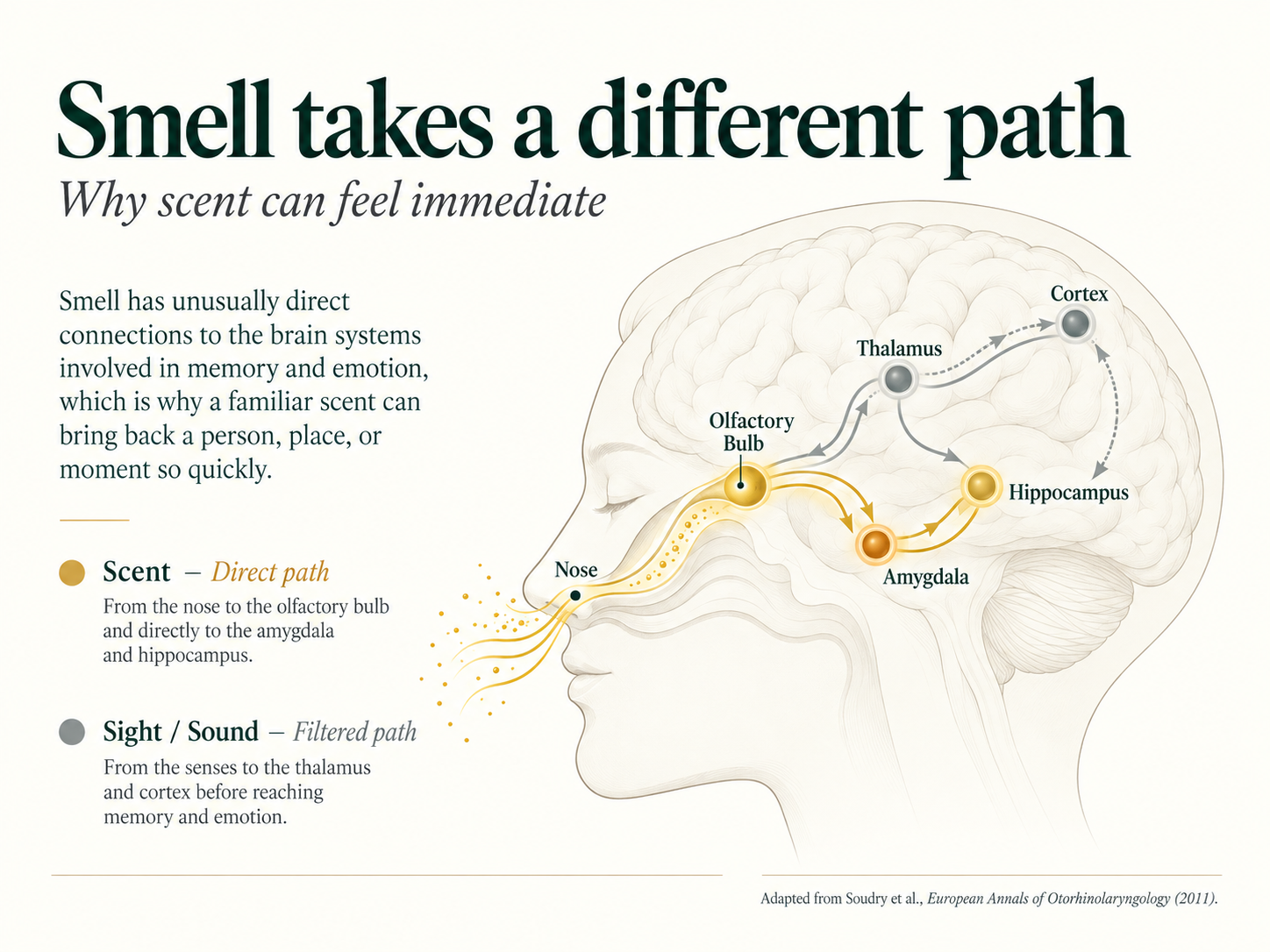
Scent takes an unusually direct neural route.
Unlike the other major senses, olfactory signals do not first pass through the thalamus before reaching primary olfactory cortex. Olfactory pathways also have close connections with regions involved in memory and emotion, including the amygdala and hippocampal system.
The olfactory system has direct connections to the amygdala and hippocampus, the areas of the brain that handle emotion and memory.
Other major sensory systems typically relay through the thalamus before reaching primary sensory cortex, while olfaction follows a distinct pathway.
This is why a scent can return you to a room, a season, or a person before you have time to think.
Source: Soudry et al., European Annals of Otorhinolaryngology (2011).
The Proust Effect
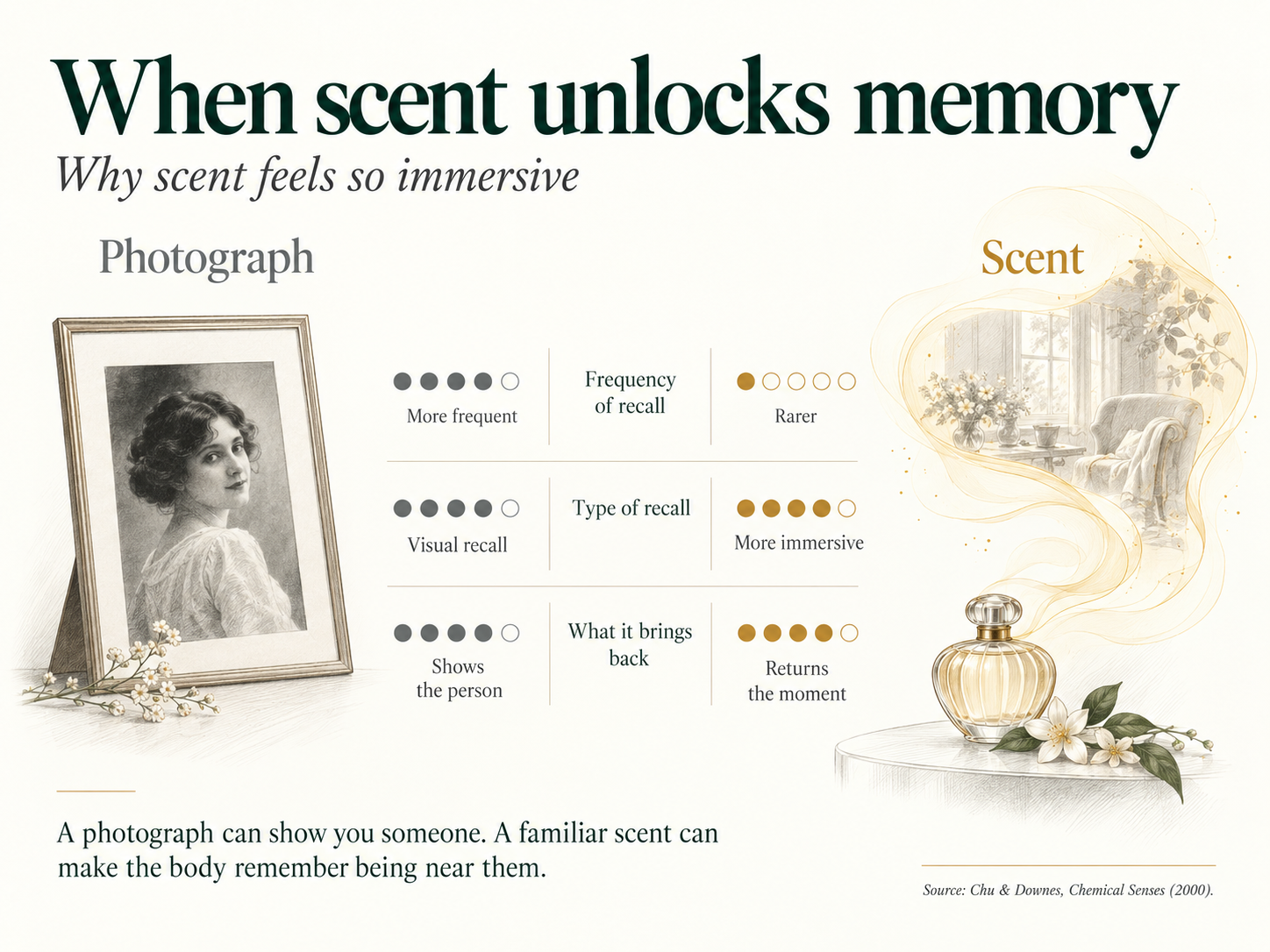
When scent unlocks memory
Odor-cued autobiographical memories can feel unusually vivid, emotional, and immersive.
They may be less frequent than memories from photos, but they feel more immersive.
A photograph can show you someone. A familiar scent can evoke the felt sense of being near them.
Researchers call this the Proust effect, named after the writer Marcel Proust and his madeleine passage.
Source: Chu & Downes, Chemical Senses (2000).
Scent, Safety, and Closeness
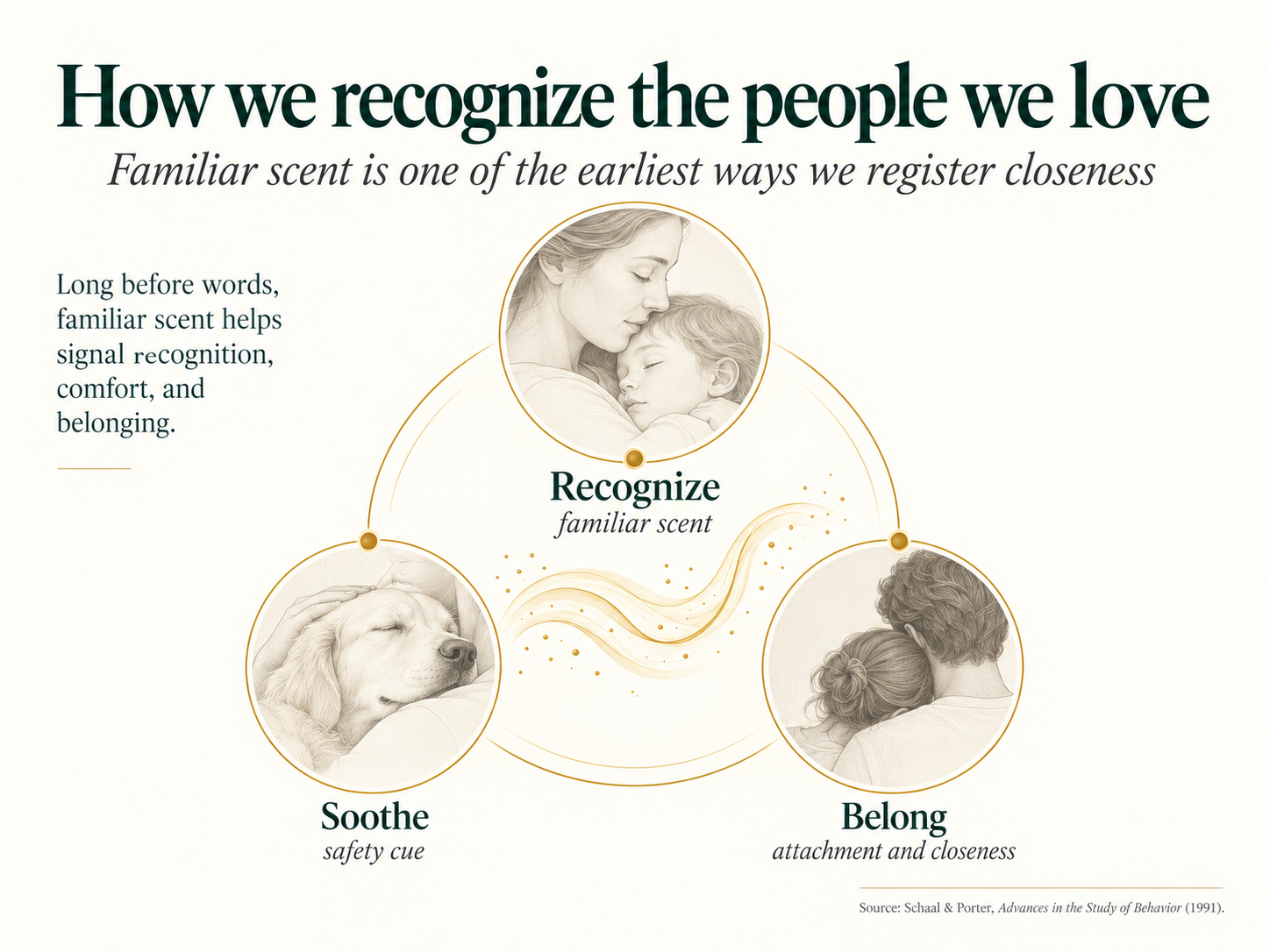
How we recognize the people we love
Familiar scent is one of the ways we recognize the people we are attached to, from infancy on.
Long before words, we learn the people close to us partly through their scent.
This is why a shirt, pillowcase, or small item can hold a recognizable trace of someone.
Scent is one of the earliest and most enduring ways we register closeness and safety.
Source: Schaal & Porter, Advances in the Study of Behavior (1991).
Why Every Scent Is Personal
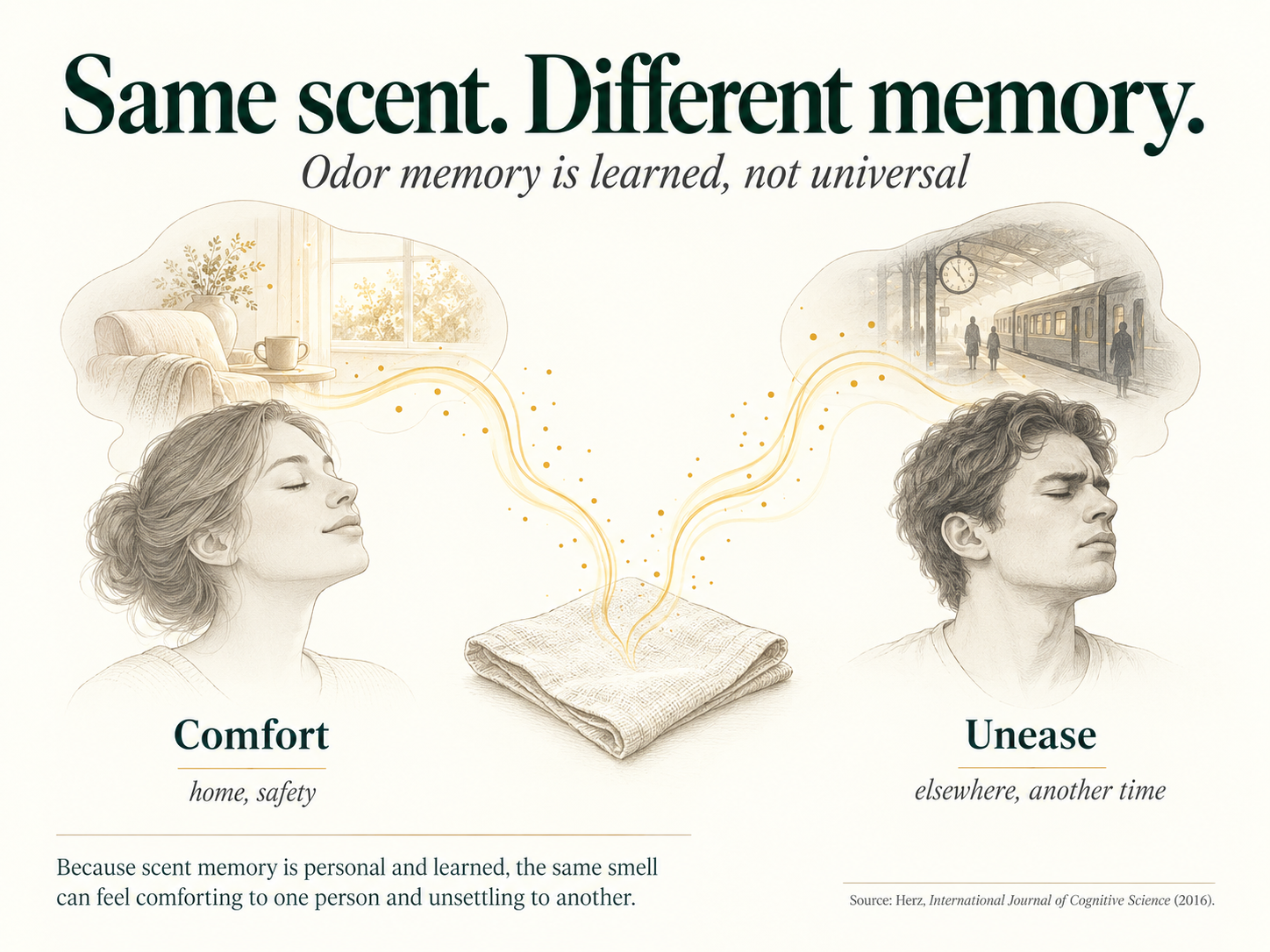
No two people share the same scent memory
Odor memory is learned, not universal. The same scent can feel comforting to one person and unsettling to another.
Human scent is a changing chemical signature of skin, oils, fabric, and time, not just laundry or perfume.
Clothing and fabric absorb and release these odor compounds, which is why a worn item can hold a recognizable scent.
Because scent memory is personal and learned, a scent that calms one person may mean nothing, or something entirely different, to another.
Source: Herz, International Journal of Cognitive Science (2016).
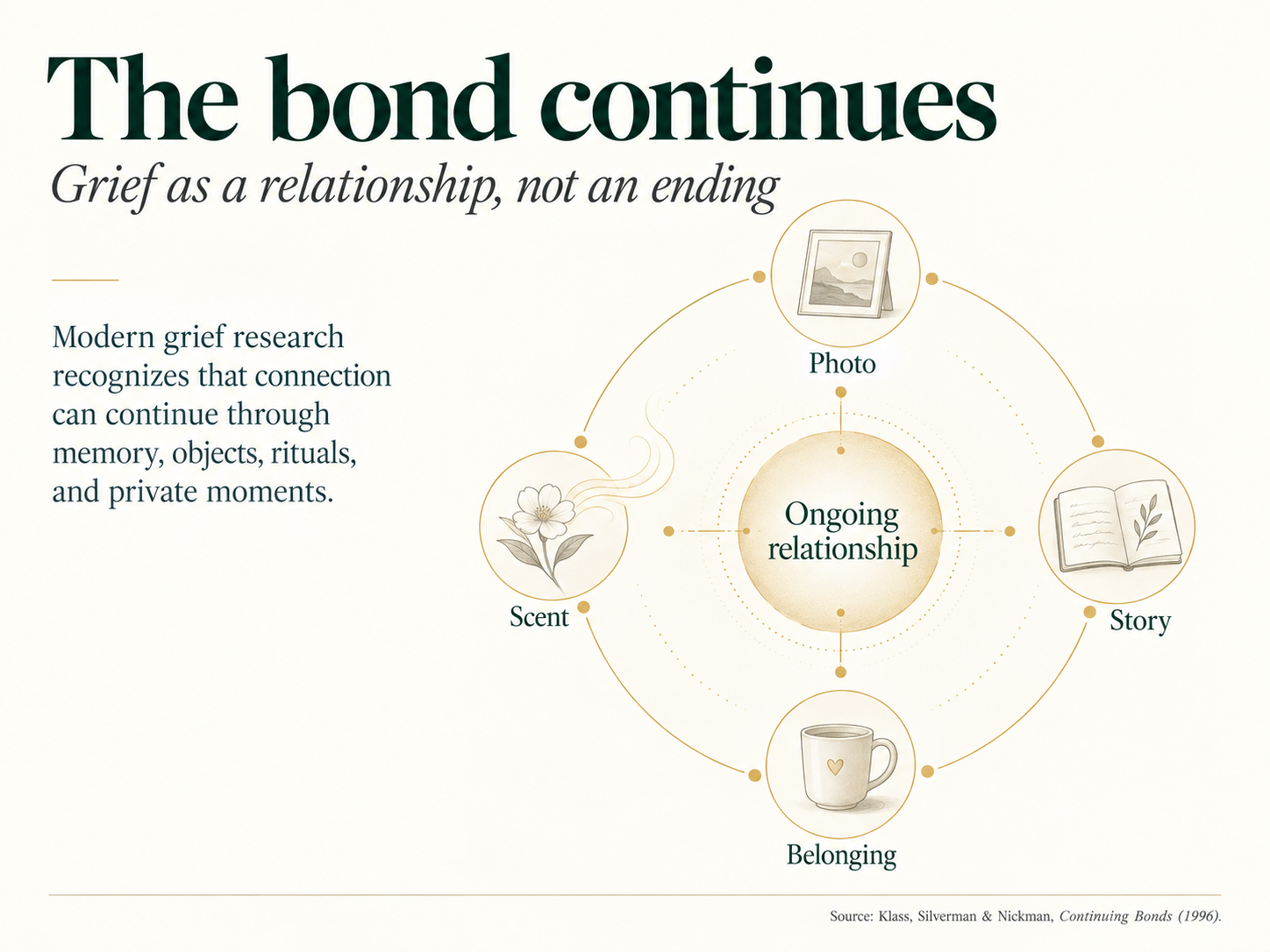
Continuing Bonds
Grief as a relationship, not an ending
Contemporary grief theory recognizes that maintaining an ongoing connection with someone who has died can be a normal part of grieving.
Researchers call this a continuing bond, the ongoing connection sustained through memory, objects, and private moments.
That bond lives in stories, photographs, belongings, and the small things only you would notice.
Scent can become a sensory bridge between what was and what remains, a way to feel close when you need to.
Source: Klass, Silverman & Nickman, Continuing Bonds: New Understandings of Grief (1996).
Why Stay is designed this way
The research explains why scent can matter. Stay is designed around what happens next.
Three separately sealed pieces let you choose what to open and when, rather than exposing everything at once. The larger keepsake space brings scent together with photographs, letters, journaling, and meaningful belongings in one private place.
Stay does not promise how long scent will remain. It simply gives you a thoughtful way to handle, separate, reseal, and return to what feels meaningful at your own pace.
This page reflects general research on scent, memory, and grief. Stay is a supportive keepsake, not a medical device or a substitute for professional care. If you are looking for personal support, a licensed grief counselor or therapist is always a good place to start.
Sources & further reading
- Soudry et al., European Annals of Otorhinolaryngology (2011).
- Chu & Downes, Chemical Senses (2000).
- Schaal & Porter, Advances in the Study of Behavior (1991).
- Herz, International Journal of Cognitive Science (2016).
- Klass, Silverman & Nickman, Continuing Bonds: New Understandings of Grief (1996).